
An explanation of Tren Maya price categories
and why foreigners pay more.

There has been a lot of discussion recently about the cost of tourists riding the Tren Maya. The first thing you'll notice when trying to buy a ticket on the Tren Maya is that there are 6 different price tiers depending on the class of service and which category you fit into. The latter of which has ruffled some feathers of expats and tourists alike. Some have refused to ride the Tren Maya until the pricing situation has been rectified. The question I'd like to answer is, are tourists getting charged a high unfair price, or are locals getting a discount for some reason? Let's get into it.
I'll be using the Cancun to Merida route for my comparisons with prices rounded to the nearest whole peso. As of this writing the current exchange rate between Mexican pesos and US Dollars is 18.65 MXN to 1 USD.
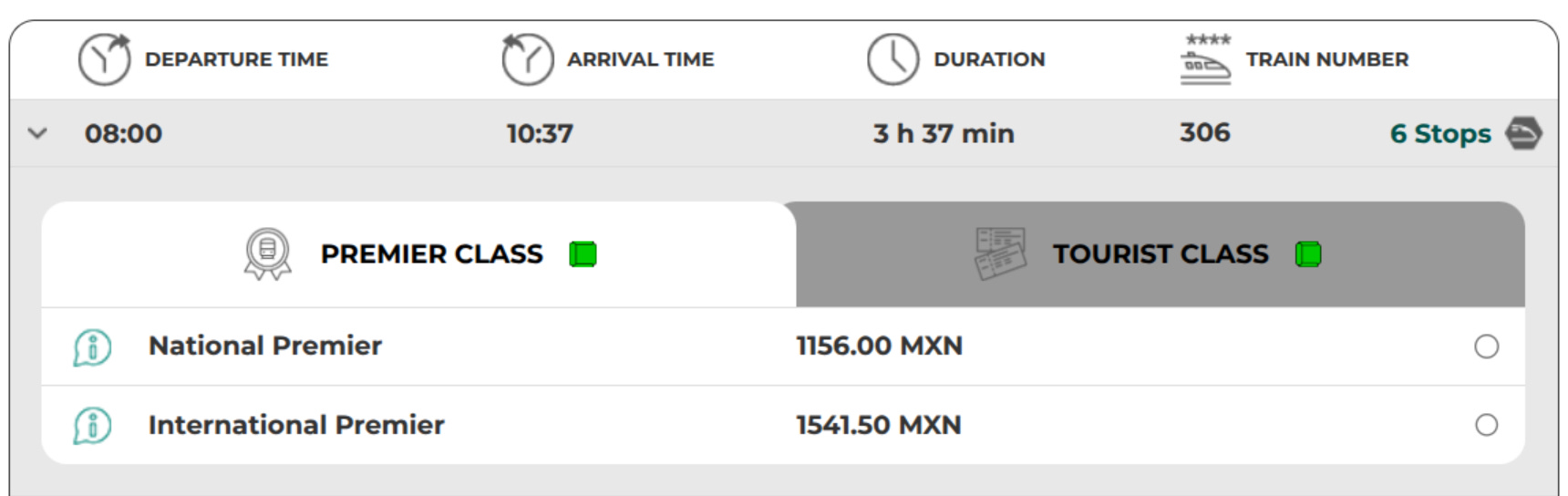
For the Premier Class ticket there are two price categories
National Premier - 1156 MXN ($62 USD)
International Premier - 1541 MXN ($83 USD)
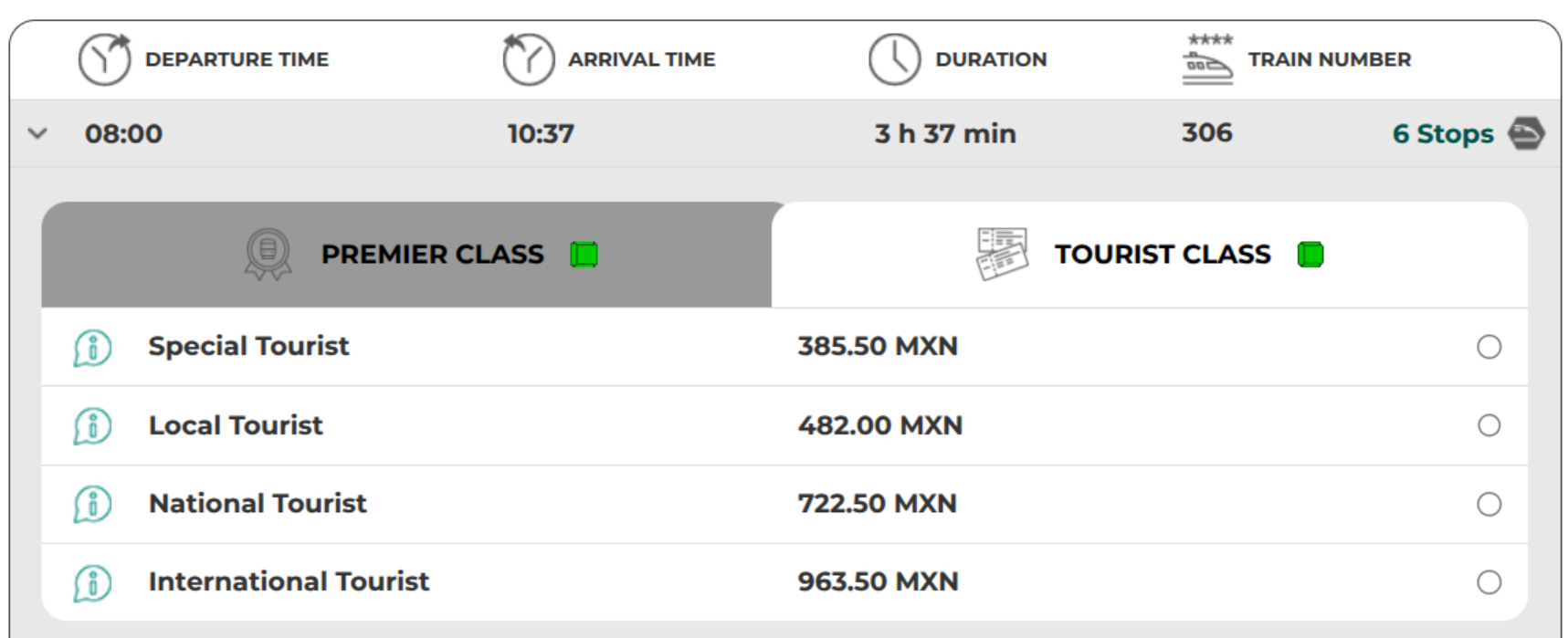
For the Tourist Class ticket there are 4 price categories
Special Tourist 386 MXN ($21 USD)
Local Tourist 482.00 MXN ($26 USD)
National Tourist 723 MXN ($39)
International Tourist 964 MXN ($52)
I believe some explanation of the categories is in order and why they exist. The construction of the Tren Maya, like most infrastructure projects was paid for by the state, in this case the Mexican Federal Government. They get 100% of their money from the people in the country paying taxes and tariffs just like every other country. As such, the burden of paying for infrastructure projects falls unequally on the shoulders of various groups of people. The running costs of most transportation systems in the world are mostly subsidized by taxes. This isn't just true in Mexico, it's true in virtually every transportation system in the world and this includes airports, freeways, city streets, city buses, and train systems. In many cases taxes are paid to offset a portion of the operation and maintenance of these systems, for instance there are gas taxes to help pay for maintenance of roads, landing costs at airports to help pay for operating costs, license plate taxes to help pay for public transit systems and so on. However, NONE of these taxes cover the entire usage of the operation and maintenance of the infrastructure and in most cases from freeways and public transportation to airports the cost is covered by direct taxes or fees paid by the people using the system. The portion paid by people using the system directly is roughly 30% and the rest of the money comes from the general fund or other broad tax systems paid for by a great deal of people, many of which who don't use the system. This is the case almost anywhere with a few exceptions and some creative accounting in others.
With that out of the way let's talk about who paid for the construction of the Tren Maya and is still paying for the operating costs.
People living in the states that the Tren Maya operates in pay both local and federal income taxes.
People living in Mexico but not in the states that the Tren Maya operates in pay federal income taxes.
People who do not pay Mexican Federal income taxes don't pay anything toward the operation of the Tren Maya.
The last category is where all tourists and almost all expats fit. I think it is improbable that any tourists traveling to Mexico would be paying Mexican income tax. Even though it's possible for temporary and permanent residents to get an RFC, have Mexican income and pay Mexican income tax I don't know of any that do unless they own a business. That leaves about 99.5% of all expats living in Mexico in the same group as tourists from the perspective of tax payers.
With this in mind when a person that lives, works and pays taxes in Quintana Roo, Yucatan, Campeche, Chiapas or Tabasco walks up to the ticket window to purchase a ticket they have already paid for half the cost of running the train through local and federal taxes so they get the Local price.
When a citizen of Mexico who pays Federal taxes walks up to the same window to purchase a ticket they've already paid 20% of the cost of operating the train through taxes so they get the National price.
When an international tourist walks up to the window to buy a ticket they've not paid any taxes toward the operation of the train so they pay the highest price which is the International price. Legal residents as a group fall into this category due to the reasons I've outlined above - they don't generally pay income tax.
Is it ethical to charge foreigners more?
Here is the root of the problem for many people - foreigners pay more even if they are legal residents living in Mexico full time. Some tourists may also look at those super cheap local prices and want to get a little of that sweet goodness. They may point out that "other countries don't do this" which may seem like a valid point at first but in fact some other countries do charge different prices for government resources depending on if the purchaser is a tax payer or not. If you try to book a plane ticket to the Galapagos Islands you may notice a really nice price and then a price that's almost double. Unless you're Ecuadorian you get the super sized price.
One person recently mentioned in a forum that the US doesn't charge different prices for citizens and foreigners to visit National Parks which is true because there are laws against it. However, if you look closely you may find ways they get around it in the form of multi-use passes at a discount. A multi-use pass isn't very handy for someone touring the US one time but it provides a nice discount for a local who visits the National Park more than once. This is a sly way of getting around the law prohibiting the practice of charging two prices. Technically the pricing is non-discriminatory but the locals benefit and most tourists don't. This is also the case with many rail passes around the world, buying a monthly or yearly pass on the French rail system at a discount probably doesn't make a lot of sense for someone spending a week there. Locals however, benefit.
The point is that some countries don't have laws prohibiting multi-tiered pricing systems such as Mexico and in countries where there are laws there are ways of giving locals a discount anyway.
There is one category though where legal residents do get the lowest price - Special Tourist.
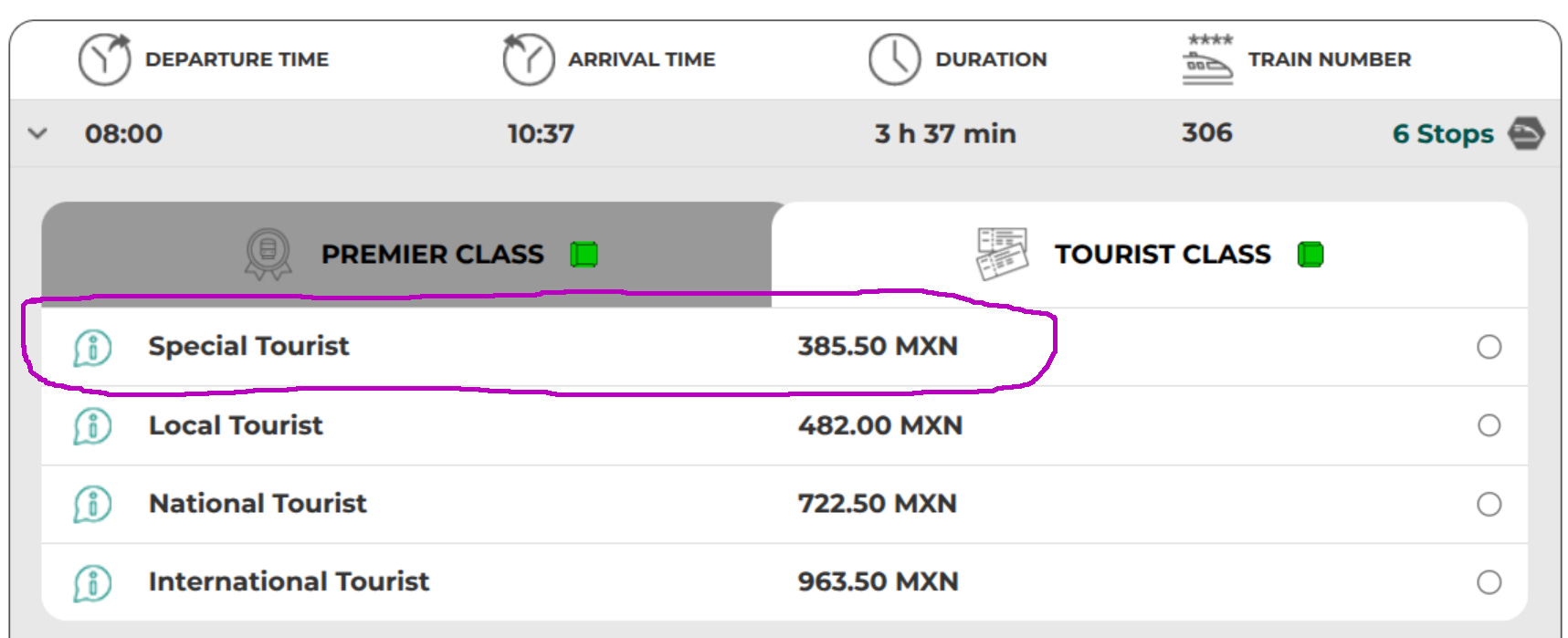
This price is the lowest price at 385 pesos and legal residents can take advantage of this if they have an INAPAM discount card for seniors and disabled people. The reason why this price category is honored even for foreigners is complex but it comes down mostly to treaties and reciprocal agreements. If one country gives another discounts for seniors then it's common for the other to reciprocate. If you are a legal resident of Mexico and are 60 years or older you can apply for this card and get very cheap prices on the train as well as discounts for other things. https://www.mexperience.com/inapam-mexicos-discount-card-for-seniors/
In a later article I will take a deep dive into whether the Tren Maya International price is competitive (or fair?) by comparing it to the 25 or so other train systems around the world that I have personal experience with so stay tuned.